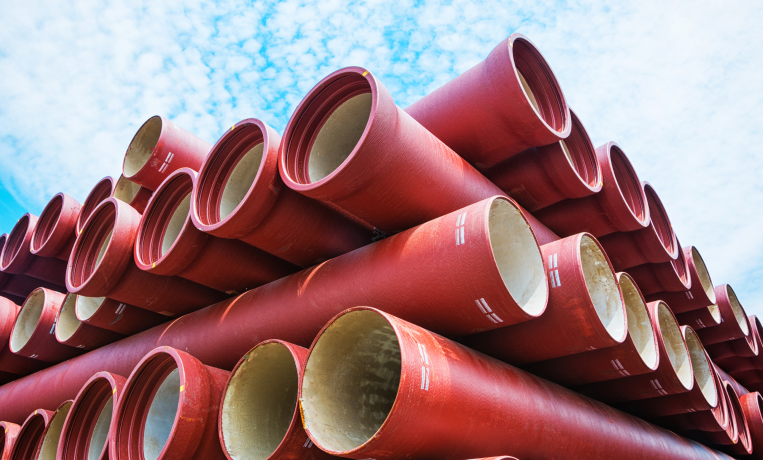
India's First BIS 18256 Certified GFRP Rebar Range


India's First BIS 18256 Certified GFRP Rebar Range

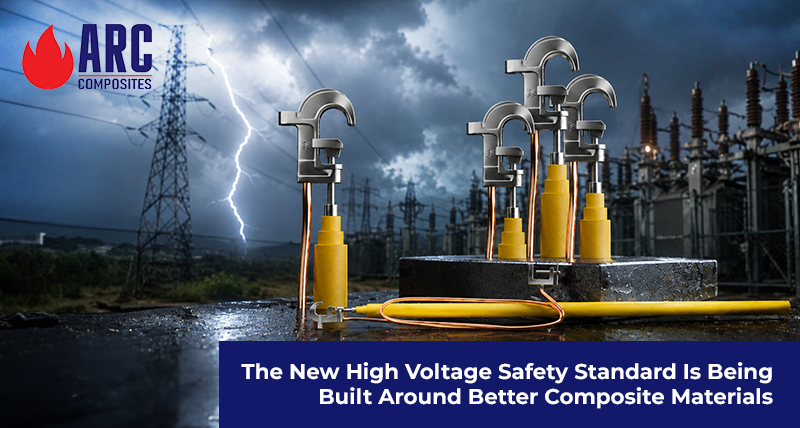
Electrical accidents rarely announce themselves. One second everything looks routine, the next second a technician is dealing with residual charge that a supposedly deadline was never meant to hold. That gap between assumption and reality is exactly where safety equipment either earns its keep or fails someone.
Substations across India are getting denser, transmission voltages are climbing, and the tools engineers carry into these environments need to keep pace. Teams still relying on old-style equipment are quietly accepting risks that better materials have already solved.
This blog walks through why FRP discharge rod technology is becoming the backbone of modern high voltage safety protocol, what dielectric strength and non-conductive design actually mean for the person holding the rod, and how composite engineering is reshaping expectations across substations, transmission environments, and power generation facilities. Stay with this one. It gets technical, but it stays human.
Safety standards do not change because someone wants new paperwork. They change because the infrastructure underneath them has changed first, and 2026 substations look nothing like the ones built even a decade ago.
High voltage safety standards are evolving because India’s power transmission network has expanded aggressively, with substation capacity additions accelerating as renewable integration, grid interconnection, and industrial demand all pull in the same direction. More substations mean more switching operations, more maintenance windows, and more human hands working close to residual charge.
Regulatory bodies have responded by tightening requirements around electrical safety equipment, particularly tools used for grounding and de-energizing circuits before maintenance begins. Many engineers now ask what is driving the new high-voltage safety standards, and the honest answer is simple. Denser grids and higher switching frequencies have exposed the limits of equipment that was designed for a slower, less demanding era.
The old assumption that metal rods with insulated handles were good enough is being replaced by a tougher question about reliability under repeated stress. Does the equipment perform consistently across humidity, temperature swings, and daily mechanical wear, or does it quietly degrade the moment field conditions turn unkind.
Discharge rods sit at the exact point where human safety meets electrical risk, and a technician grounding a line is trusting that tool completely. Composite materials entered this conversation because they solve problems that steel and aluminum structurally cannot. Fiberglass reinforced polymer does not conduct electricity the way metal does, and that single property changes the entire safety calculation for anyone standing near a high-voltage line.
Understanding why composite rods outperform older tools starts with understanding what they are actually made of and how that structure behaves under load.
A discharge rod exists to safely release trapped electrical charge from a line or equipment before anyone touches it. Traditional rods relied on metal cores wrapped in insulation, which worked reasonably well until the insulation aged, cracked, or absorbed moisture, and that degradation was often invisible until it mattered most.
Glass fiber reinforced polymer, commonly shortened to GFRP, replaces that entire approach. Instead of insulating a conductive core, the rod itself is built from a material that is non-conductive from the inside out. Glass fibers are embedded within a polymer resin matrix, creating a structure that resists electrical current at a molecular level rather than relying on a surface coating that can wear away over time.
This matters enormously for dielectric performance. A well-manufactured FRP discharge rod maintains its insulating properties across a wide voltage range and does not develop the microscopic surface tracking that eventually turns older insulated tools into liabilities. The material also brings non-sparking characteristics, which becomes critical in environments where even a small spark near flammable vapours or dust could trigger a serious incident.
Weight is another factor that rarely gets discussed but matters daily to the people using this equipment. FRP rods are dramatically lighter than comparable steel tools, up to seven times lighter by some manufacturing benchmarks, which reduces technician fatigue during long maintenance shifts and makes handling safer when working at height or in awkward substation layouts.
Dielectric strength is the single specification that decides whether a discharge rod actually protects the person holding it, and it deserves more attention than it usually gets.
Field engineers frequently want to know what makes a discharge rod safe for high voltage use, and the honest answer starts and ends with dielectric strength, which measures how much voltage a material can withstand before it breaks down and starts conducting current. GFRP composite structures achieve high dielectric strength because the glass fiber and resin combination creates a dense, uniform barrier against current flow.
Unlike wood, which was historically used for discharge poles and hot sticks, composite materials do not absorb moisture from humid air the way organic fibers do. Moisture absorption is one of the fastest ways an insulating tool loses its protective properties, particularly in coastal regions or during monsoon season when humidity in parts of India regularly exceeds eighty percent.
Manufacturers testing FRP rods for substation use typically validate performance across multiple voltage classes, ensuring the rod maintains its insulating barrier well beyond the rated operating voltage as a safety margin. This buffer matters because field conditions are rarely as clean as laboratory conditions. Dust accumulation, surface contamination, and minor scratches from repeated use can all reduce effective dielectric performance over time, so starting with a wide safety margin protects technicians even as equipment ages through normal wear.
Corrosion resistance compounds this advantage, since metal components exposed to industrial atmospheres, coastal salt air, or chemical processing environments degrade steadily, and that degradation often affects electrical performance long before it becomes visually obvious. Composite rods sidestep this entire failure mode because there is no metal core to corrode in the first place.
Strength and weight usually work against each other in engineering, but composite rod design manages to balance both without compromising safety.
Safety equipment that is too heavy to use comfortably eventually gets used carelessly, and that carelessness is where accidents creep in, which is why mechanical strength and weight need to be considered together rather than as separate specifications. Pultruded FRP manufacturing, the process most commonly used to produce discharge rods, aligns continuous glass fibers along the length of the rod before curing them within a resin matrix.
This produces a component with tensile strength that regularly exceeds comparable steel sections while weighing a fraction as much. Independent testing on GFRP materials has shown tensile strength roughly double that of standard reinforcing steel on a like-for-like basis, a figure that carries over meaningfully into rod and pole applications used across substations and transmission maintenance.
That strength advantage shows up practically in how the rod handles repeated flexing, accidental drops, and the general wear of daily field use. Rods that crack or splinter under mechanical stress become dangerous almost immediately, since any break in the composite structure creates a potential path for current to bypass the intended insulating barrier.
Quality FRP discharge rods are engineered to resist this kind of structural failure, maintaining both their physical integrity and their electrical isolation properties even after years of active service. A tool that gets heavier and more brittle every year it is used stops being trustworthy fast, and that decline is exactly what composite engineering was designed to prevent.
Weather is not a minor detail for safety equipment stored and used outdoors year-round, and it deserves its own close look.
Utilities and safety officers often want clarity on how humidity affects discharge rod performance, since moisture is one of the most underestimated threats to electrical safety equipment, particularly in a country where monsoon conditions, coastal humidity, and industrial steam exposure are all part of normal operating environments for substation crews.
Organic and semi-organic materials tend to absorb ambient moisture over time, and that absorbed water creates conductive pathways within what is supposed to be an insulating structure. FRP composite rods resist this because the resin matrix effectively seals the glass fibers from the surrounding environment, preventing water ingress that would otherwise compromise dielectric performance.
This resistance to moisture exposure extends the practical service life of the equipment considerably. Where older wooden or poorly sealed tools required regular reconditioning, drying, and inspection cycles, composite rods maintain consistent performance across seasonal humidity swings without that maintenance burden. For utilities managing large fleets of safety equipment across dozens or hundreds of substations, that reliability translates directly into lower lifecycle costs and fewer unexpected equipment failures during critical maintenance windows.
UV exposure is another consideration that field engineers often overlook until it becomes a problem, since rods used outdoors in direct sunlight for extended periods can experience surface degradation in lower-quality composites. Manufacturers addressing this properly incorporate UV stabilized resin formulations specifically to prevent the kind of surface chalking and fiber exposure that would otherwise reduce both mechanical and electrical performance over years of outdoor service.
Composite discharge rods have moved from a niche alternative to standard-issue equipment across several parts of the power sector, and it helps to see exactly where.
Substation environments present a demanding combination of requirements that few materials satisfy simultaneously, and equipment needs to be electrically safe, mechanically durable, lightweight enough for daily handling, and resistant to the chemical and environmental exposure common in industrial power infrastructure.
FRP discharge rods have become standard equipment for grounding operations before maintenance work begins on isolated lines and equipment. Technicians use them to safely dissipate any residual charge that might remain even after switches are opened and circuits are supposedly de-energized, protecting against the very real possibility of induced voltage or capacitive charge that standard switching procedures do not always fully eliminate.
Beyond substations, transmission line maintenance crews rely on similar composite tools for work adjacent to live equipment, where any conductive material introduced near an energized line poses catastrophic risk. Power generation facilities, including thermal and renewable installations, use discharge rods during routine maintenance, equipment commissioning, and emergency response scenarios where rapid, safe charge dissipation is essential.
The growing adoption of GFRP rebar, structural profiles, cable trays, and other composite infrastructure components across these same facilities reflects a broader industry recognition that fiberglass reinforced polymer solves problems traditional materials cannot, whether the application involves structural reinforcement, chemical resistance, or electrical isolation. ARC Composites has built its manufacturing expertise specifically around this composite ecosystem, producing FRP discharge rods alongside a wider range of pultruded fiberglass products engineered for exactly these demanding industrial conditions.
Not every composite rod on the market is built to the same standard, and manufacturing quality is often the deciding factor between a safe tool and a risky one.
Many procurement teams and safety officers ask if FRP discharge rod manufacturing is standardized, and quality control is exactly what separates a genuinely safe composite discharge rod from one that merely looks the part. The pultrusion process used to manufacture these rods requires precise control over fiber alignment, resin saturation, and curing temperature, since inconsistencies at any stage can create weak points that compromise both mechanical strength and dielectric performance.
Reputable manufacturers test finished rods against established voltage withstand parameters before products reach the field, ensuring every unit meets its rated performance rather than relying on generalized material specifications.
This testing typically includes dry and wet dielectric withstand assessments, since a rod that performs well in dry laboratory conditions but fails under simulated rain or humidity is not actually safe for real substation environments. Certification against recognized standards gives utilities and safety officers a verifiable benchmark rather than relying purely on manufacturer’s claims.
Manufacturers producing certified GFRP products, including rebar validated against national standards frameworks, demonstrate a broader organizational commitment to quality control that typically extends across their entire product range, including discharge rods and related safety equipment.
High-voltage safety is not improving because someone decided old equipment looked outdated. It is improving because substations are busier, technicians are working closer to residual charge more often, and the margin for equipment failure has effectively disappeared.
FRP discharge rods answer that pressure directly, combining strong dielectric performance, genuine corrosion resistance, moisture resilience, and a weight profile that keeps technicians safer through long shifts. Composite materials are not a trend passing through the electrical safety industry. They represent a fundamental rethink of how insulating tools should be built, tested, and trusted.
Utilities, EPC contractors, and maintenance teams that upgrade to properly manufactured GFRP discharge equipment are making a measurable investment in reducing preventable accidents across their operations.
If your team is still relying on ageing metal- or wood-based discharge tools, this is the moment to reconsider. ARC Composites manufactures FRP discharge rods engineered for real substation, transmission, and power generation conditions, backed by rigorous pultrusion quality control and decades of composite manufacturing experience. Reach out to explore how properly engineered.
FRP discharge rods and the wider GFRP product range can strengthen your electrical safety protocols while cutting long-term maintenance costs. Your maintenance crews deserve equipment that performs exactly as promised, every single time they pick it up.
It safely dissipates residual electrical charge from lines or equipment before maintenance begins, protecting technicians from unexpected shocks after circuits are switched off.
GFRP is naturally non-conductive, corrosion resistant, and far lighter than metal, eliminating the insulation failure risks that come with metal-cored tools.
Yes, quality composite rods resist moisture absorption, maintaining dielectric strength across monsoon humidity and coastal environments better than wood or poorly sealed alternatives.
With proper manufacturing and care, they offer significantly longer service life than traditional tools, since they resist corrosion, moisture damage, and UV degradation.
Manufacturers produce rods rated for specific voltage ranges, so selecting the correct rating for your substation or transmission voltage class is essential for safety.